Membership Luncheons

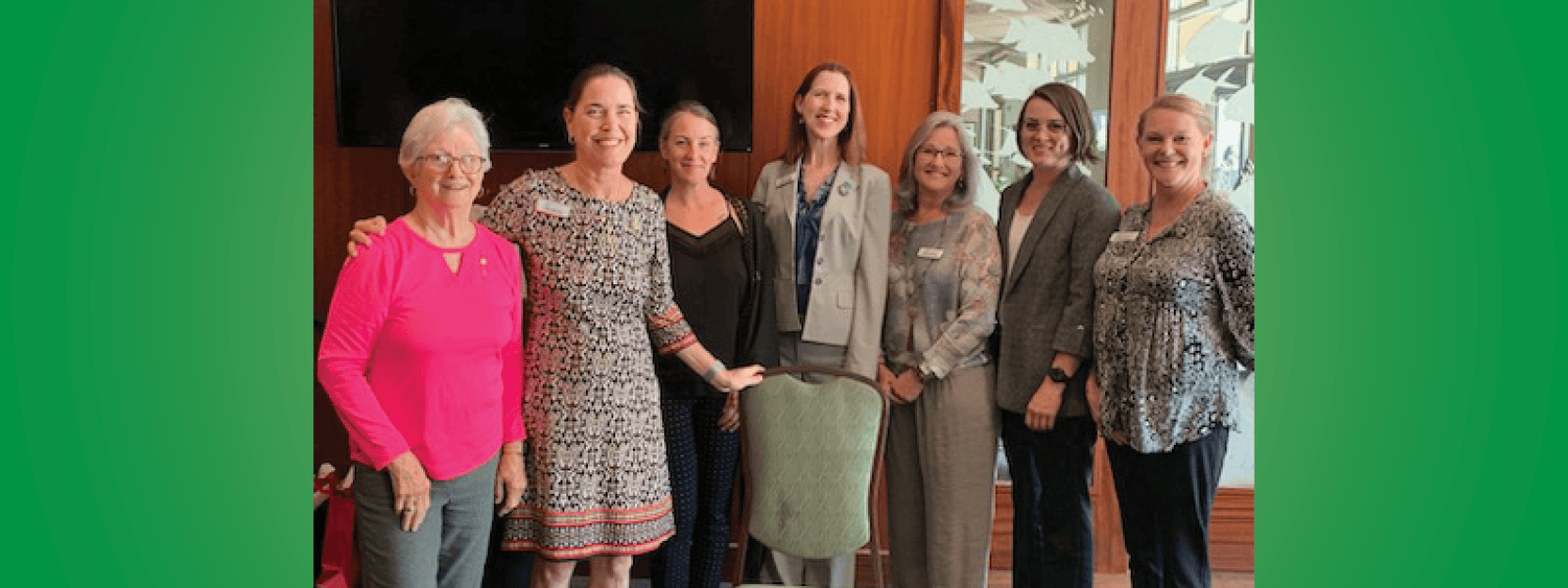
Join us for a monthly luncheon meeting of the general membership. Usually held on the first Thursday of the month at Parkshore Grill, we have a fast paced hour that includes a speaker on a topic relevant to working women and a little business while we enjoy a delicious lunch. Guests are welcome but advance reservations are recommended.

Reserve Your Seat

Signature Events

Vital to our mission for women’s workplace equity through advocacy, education and information are events enjoyed by the larger Tampa Bay Area community like our Unhappy Hour observance of Equal Pay Day in March, our annual celebration of Women’s Equality Day in August and our Working Women’s Forum in October.

Learn More

Become A Member

Do you support equity for all working women? Join BPW and help us fulfill our mission of equity for all working women through advocacy, education and connections. With an annual membership cost of $120*  you can participate in leadership programs, engage with our public policy platform, and enjoy local and statewide networking. *student and retiree memberships are available.


Join in the Fun

Join as we welcome Kenneth T. Welch, the 54th Mayor of St. Petersburg and the first African-American mayor in the city’s history. A proud third-generation St. Pete resident, Mayor Welch has been serving the community for a quarter of a century – first as a county commissioner and now as mayor – leading St. Pete with a focus on opportunity, equity, and inclusive progress.

Mayor  Welch will discuss key priorities shaping the future of St. Petersburg, including affordability, Housing Opportunities for All, the transformative redevelopment of the Historic Gas Plant District, and making  major citywide infrastructure investments through the St. Pete Agile Resilience (SPAR) Plan. #WeAreAtPete

In November 2021, Ken was elected to become the first African American mayor of St. Petersburg, FL – a unifying leader who believes in partnership and working toward a common goal of authentic progress for every neighborhood. Mayor-elect Ken Welch is a third-generation St. Petersburg native. He grew up on 16th Street, where his grandfather ran a wood yard and was a deacon at Prayer Tower Church – both in the Gas Plant area. A few blocks away, his grandparents built a home by hand on 7th Avenue near 22 nd Street, known as the Deuces.


Growing up, Ken and his cousins worked in the wood yard, and his grandparents’ home served as the after-school daycare hub for Ken and his cousins. Eventually, the wood yard and church were displaced by Interstate 275 and the public purchase of the Gas Plant area for redevelopment. The redevelopment never occurred, and the Gas Plant property eventually was used to build Tropicana Field to attract a Major League Baseball franchise. His grandparents’ home was purchased to expand 16th Street Middle School (now named John Hopkins). All in the name of progress.


Ken graduated from Lakewood High School, where he focused on business courses, played saxophone in the band and anchored the offensive line on the Pinellas County championship team in 1980. He went on to earn Bachelor’s and MBA degrees from the University of South Florida St. Petersburg and Florida A&M University, respectively. Ken and his wife, Donna, have been married for 30 years and have two daughters, Keonna and Kenya.


While at Florida A&M completing his MBA studies, Ken was hired by Florida Power Corp., headquartered less than 2 miles from his home in St. Petersburg, as an accountant. Ken worked for Florida Power for 14 years and at additional jobs Raymond James and St. Petersburg College, working in accounting, IT, and business administration. His focus was accounting, business technology and business process improvement.


Ken was elected to the Pinellas Board of County Commissioners, District 7, in 2000, representing St. Petersburg, Lealman, Gulfport and South Pasadena. He was subsequently re-elected to four consecutive terms. Commissioner Welch served as commission chair in 2006, 2013 and 2018. He focused on community progress on issues including justice reform, poverty reduction, housing, transportation, environmental protection, community development and homeless services.


As a commissioner, Ken led the effort to create the first Pinellas Community Redevelopment Area (CRA) focused on poverty reduction. The South St. Petersburg CRA is the first of its kind in Pinellas and will generate more than $100 million in county and city funding to reduce poverty over the 30 years. He also led the adoption of the countywide Adult Pre-Arrest Diversion program, the increase in the minimum wage for county employees to $12.50 an hour, the county’s adoption of workplace and housing protections for the LGBTQ community, and the county’s local investment of more than $100 million for affordable and workforce housing. As chair of the Pinellas Tourism Development Council, he represented the county at international tourism conferences in London and Berlin. As commission chair, he joined regional leaders to represent the county in Mexico City in 2018 as a part of the Global Tampa Bay initiative.


Commissioner Welch was elected as the Florida Association of Counties 1 st Vice President, served on the Board of Directors, and has served as Urban Caucus Co-Chair and Finance/Admin/Transportation Chair at the state level. He is a multiple recipient of the FAC Presidential Leadership Award and a Certified County Commissioner. In 2010, Commissioner Welch debated a group of pro-drilling advocates at WFSU in Tallahassee, including industry lobbyists and the incoming Senate president and speaker of the House. The BP Gulf Spill occurred shortly thereafter.


In 2020, Ken Welch led a strong, science-based response to COVID-19 in Pinellas County – including beach closures, a Safer-At-Home ordinance and a countywide mask ordinance. As a strong voice for public health, he was invited to join Chris Cuomo on CNN to discuss the Pinellas County response to COVID on a day when Mr. Cuomo noted that multiple Florida officials refused the invitation to appear on television to speak on the deadly pandemic. As chair of the Pinellas County Complete County Committee for the 2020 Census, Welch led the committee’s two years of collaboration, resulting in the highest census response rate in the Tampa Bay area, and second-highest of any large urban county in Florida. Ken has received numerous recognitions for his leadership, including the Florida Association of Counties Presidential Advocate designation, Sierra Club Black Bear Award, Catholic Charities Angel Award, PACE Governmental Leadership Award, Urban League Government Award, and Daystar’s “With These Hands”; recognition, among others.


Before his election to the county commission, Commissioner Welch was appointed by Gov. Jeb Bush to the St. Petersburg Junior College Board of Trustees, where he was part of a strong board consensus to create four-year access at SPJC, leading to the evolution of the college to St. Petersburg College, offering Bachelor’s Degree options to Pinellas residents.

donate now button

If you like the programming, scholarships and grants of BPW/St. Petersburg – Pinellas, please consider donating to our general fund help us underwrite our valuable programming.

Stay up to date on what’s happening with BPW

TOUCH BASE TUESDAY

Stay up to date on all the news, events and opportunities with our weekly enewsletter. If you haven’t seen the pop up message and you wish to sign up, please email info@BPWStPetePinellas.org

Member Sponsors

The following members made this site possible through their financial support. You can visit their websites by clicking on their logo below.

qode-eliptic-slider
About BPW

Over 100 Years Strong

While mobilizing for World War I, the U.S. Government recognized the need for a cohesive group to coordinate identification of women’s available skills and experience.

Learn More About the History of BPW
qode-eliptic-slider
About BPW

BPW Florida – There From The Start

The Florida Federation of Business and Professional Womens Clubs, Inc. was one of the first statewide BPW organizations in existence and continues to unite local organizations by setting our public policy platform, supporting the development of new and existing local organizations and creating opportunities for members to connect with like minded individuals from around the state of Florida.

Visit BPW / Florida
qode-eliptic-slider
About BPW

Locally Our Organization Started in the 1960s

Our state federation, BPW/Florida may have started at the beginning but our local was founded in 1966 as Mid-Day BPW because we met for lunch instead of the evening like most clubs.

Click to see our list of past Presidents

Your 2025-2026 Leadership Team

DEI and Affirmative Action


Understanding the nuances that differentiate Employment Equity (EE) and Affirmative Action (AA) is essential in creating a diverse, inclusive, and fair workplace. Although interconnected, these concepts have unique applications and implications.


Employment Equity provides equal opportunities, allowing everyone to thrive regardless of background or personal characteristics. This principle ensures everyone has the same access to career progression and personal development, eliminating discriminatory practices that might hamper their growth.


Conversely, Affirmative Action is a proactive policy to increase workplace and educational opportunities for demographic groups historically underrepresented in leadership and professional roles. AA is a countermeasure to systemic biases and prejudices, supporting those consistently deprived of fair and equal treatment.


It’s crucial to comprehend the seven pillars of diversity that underpin these principles and ensure their successful implementation:


    1. Access: Guaranteeing equal opportunities for all individuals.
    2. Attitude: Fostering a positive, accepting mindset towards differences.
    3. Choice: Ensuring individuals have the freedom to express their unique characteristics.
    4. Partnerships: Building solid relationships based on mutual respect and understanding.
    5. Communication: Encouraging open dialogue about diversity and inclusion.
    6. Policy: Implementing guidelines that uphold diversity and fairness.
    7. Opportunities: Creating equal chances for personal and professional growth.


As we strive to promote equality, diversity, and inclusion, we must address three significant barriers:


  1. Unconscious bias: Tackling the often invisible prejudices that can unfairly influence decisions.
  2. Lack of representation: Increasing the presence of underrepresented groups in all areas and levels of the organization.
  3. Privilege: Recognizing and mitigating some individuals’ advantages over others.


Lastly, it’s essential to note the connection between Diversity, Equity, and Inclusion (DEI) initiatives and Affirmative Action. While DEI is a broad framework that aims to create an environment where everyone feels valued, Affirmative Action is a set of actions implemented to address historical and ongoing discrimination. DEI often encompasses Affirmative Action strategies as part of its toolkit, aiming to create a society where opportunities are genuinely equal. Together, DEI and Affirmative Action form the front line in the battle against structural barriers and the drive toward a more inclusive society.

BPW Florida Public Policy Platform

BPW/FL supports public policies that:
• ensure pay equity and equal employment opportunities for all women
• promote opportunities for women-owned businesses
• promote affordable, quality dependent care
• promote Social Security and retirement reform options benefiting women
• guarantee a workplace free from harassment and discrimination

BPW/FL supports public policies that:
• support the expansion of affordable care, including Medicaid, in Florida
• support funding and initiatives that cover women’s health care needs
• ensure women’s access to all health care and family planning needs, including full access to all forms of reproductive health services, education, and prescriptions

BPW/FL supports public policies that:
• promote free and fair elections
• are aimed at expanding voters’ access to the polls
• are designed to protect the right of all American citizens to vote in fairly drawn
legislative districts